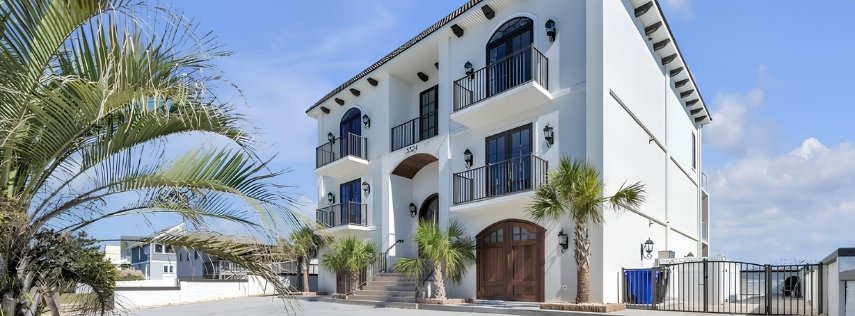
Real Estate Investment Virginia Beach – Complete Guide
Virginia Beach offers investors access to a diverse housing market supported by tourism, military employment, and steady rental demand. However, returns depend heavily on location, property type, financing, and operating costs.
Is Virginia Beach a Good Place to Invest in Real Estate?

RBC Homes – Great White Shack
Yes, Virginia Beach can be a strong real estate investment market for buyers seeking rental income and long-term appreciation. Demand comes from military families, professionals, residents, and tourists. Still, investors must evaluate purchase price, rental strategy, flood risk, insurance, HOA rules, and local short-term rental regulations carefully.
Read on to explore the market, profitability, best strategies, neighborhoods, costs, and risks.
Real Estate Market Trends in Virginia Beach
Virginia Beach continues to show rising property values, competitive buyer demand, and relatively strong rents. However, investors face higher acquisition costs and must analyze individual neighborhoods carefully because prices, rents, inventory, and tenant demand vary across the city.
Current Home Price Trends
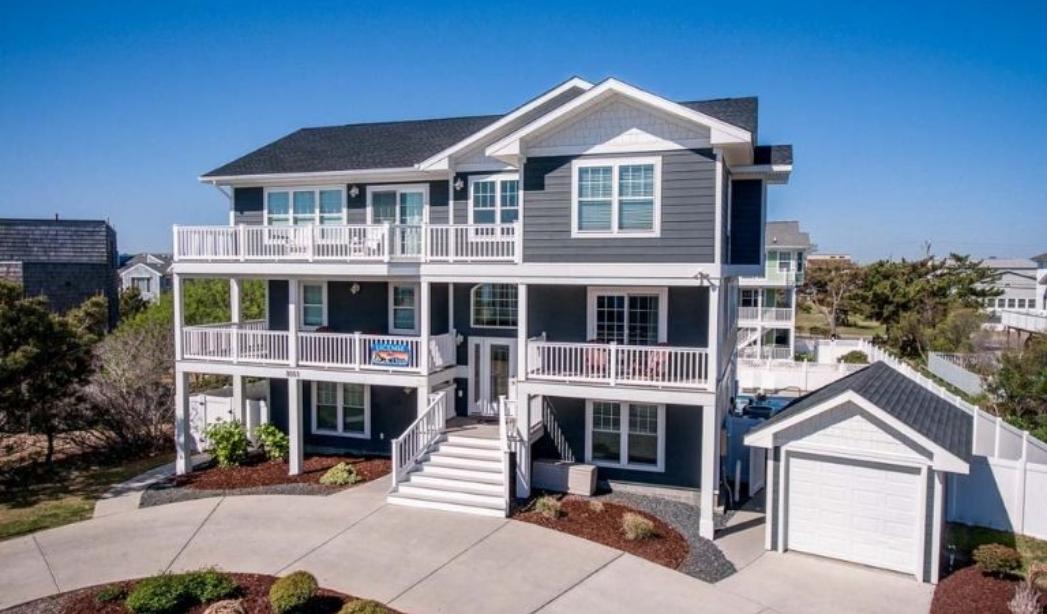
RBC Homes – A License to Chill
Over the three months ending in May 2026, the median Virginia Beach home sold for approximately $415,000, representing a 5.1% year-over-year increase. Homes took a median of 23 days to sell, compared with 22 days during the same period a year earlier.
These figures indicate continued price growth rather than a major market correction. Rising values can benefit existing owners through equity growth, but they also raise the initial investment and financing costs for new buyers.
Investors should distinguish between the median sale price and the median listing price. In April 2026, the city’s median asking price was approximately $482,500, but asking prices do not necessarily represent completed sale values.
Rental Demand and Vacancy Trends
The average advertised rent across all property types and bedroom counts in Virginia Beach is approximately $2,300 per month. Average rents are about $1,699 for a one-bedroom property, $1,922 for a two-bedroom property, and $2,484 for a three-bedroom property.
Rental demand supports real estate investment in Virginia Beach through military households, defense employees, families, professionals, students, and seasonal visitors. However, a citywide average does not predict the rent or vacancy rate of an individual property. Investors should review comparable leases within the same neighborhood and property class.
Vacancy risk may be lower for well-priced long-term rentals near employment centers, military installations, schools, and major transportation routes. Short-term rentals follow a different pattern: demand can be strong near the coast during peak travel periods but weaker outside the main tourism season.
Housing Inventory and Market Competition
Virginia Beach homes sold in approximately 23 days during the three months ending in May 2026, considerably faster than Virginia’s statewide median of 37 days and the national median of 49 days.
The relatively short selling period suggests that desirable, accurately priced properties still attract buyers quickly. Investors may face competition for renovated homes, affordable single-family properties, and listings located near beaches, military installations, or high-demand school districts.
However, conditions differ by price range and property type. A property that has remained listed longer than comparable homes may offer negotiating leverage, but investors should determine whether the delay results from overpricing, deferred maintenance, flood exposure, HOA restrictions, or an undesirable location.
Implications for Real Estate Investors
Current conditions create several practical implications:
- Rising prices may support long-term appreciation but make immediate cash flow harder to achieve.
- Strong rents can support investment demand, but gross rent should not be confused with net profit.
- Fast-moving listings require financing preparation and a clear acquisition strategy.
- Investors should use neighborhood-level sales and rental comparables instead of relying only on citywide averages.
- Higher-priced properties must justify their cost through stronger rent, lower operating risk, value-add potential, or superior appreciation prospects.
Virginia Beach remains competitive, but investors should avoid purchasing solely because the broader market is growing. The better opportunity is a property acquired at a defensible price with verified rental demand, realistic expenses, adequate reserves, and a clear exit strategy.
Long-Term Rental vs. Short-Term Rental in Virginia Beach
Virginia Beach supports several rental strategies, but they produce different income patterns, operating costs, and regulatory risks. Investors should choose a strategy only after confirming neighborhood demand, comparable rents, zoning eligibility, HOA rules, and realistic annual expenses.
Long-Term Rental Potential

RBC Homes – Amazing Grace
Long-term rentals can support real estate investment in Virginia Beach by providing steadier income, lower turnover costs, and simpler management than vacation rentals. Demand comes from military households, defense employees, families, and professionals seeking housing near employment centers, schools, military installations, and major transportation routes.
As of July 2026, the average advertised rent across all property types in Virginia Beach is approximately $2,300 per month. Average rents are about $1,699 for one-bedroom properties, $1,922 for two-bedroom properties, and $2,484 for three-bedroom properties. These citywide figures should be used only as a starting point; investors need comparable leases for the same neighborhood and property type.
Long-term rentals are generally best suited to investors who prioritize:
- Predictable monthly income
- Lower furnishing and cleaning expenses
- Fewer tenant turnovers
- Less seasonal volatility
- A more passive management model
Their main limitations are annual lease constraints, potential eviction costs, maintenance obligations, and slower opportunities to adjust rents.
Short-Term Rental Potential

RBC Homes – Oh the Places You’ll Go
Short-term rentals may produce higher nightly income in coastal and tourism-focused areas, especially during peak travel seasons. However, gross revenue can overstate profitability once seasonal vacancies, furnishings, utilities, cleaning, platform fees, supplies, maintenance, management, and lodging taxes are deducted.
Virginia Beach defines a short-term rental as an entire dwelling rented for fewer than 30 consecutive days. A qualifying property must have a zoning permit for each rental address, renewed annually at a current cost of $500. Not every property is eligible, so investors should verify approval before purchasing.
Operators must also comply with occupancy, noise, trash, parking, and responsible-party requirements. The city generally prohibits more than two overnight occupants per bedroom after 11 p.m.
Short-term rental income is also subject to transient occupancy and sales taxes. The combined rate is currently 15% in most of Virginia Beach and 16.5% within the Sandbridge Special Service District, although the tax is normally charged to the guest and remitted by the operator or booking intermediary.
Short-term rentals may suit investors who have:
- A legally eligible property in a strong visitor location
- Enough reserves to absorb off-season vacancies
- The ability to manage frequent turnovers
- A reliable cleaning and maintenance operation
- Conservative occupancy and nightly-rate projections
Which Strategy Is More Profitable?
No rental strategy is automatically the most profitable. The correct comparison is based on annual net income, not monthly rent or nightly revenue.
A long-term rental may deliver stronger returns when occupancy is consistent, management expenses are lower, and operating costs are easier to predict. A short-term rental may earn more gross revenue in an eligible coastal area, but that advantage can shrink once seasonality, cleaning, utilities, furnishings, management, taxes, and compliance costs are factored in.
Investors should compare each strategy using:
Annual net income = Gross rental revenue − vacancy − operating expenses
The strongest option is the strategy that produces the best risk-adjusted cash flow after realistic occupancy, financing, maintenance, insurance, management, and compliance costs—not the strategy with the highest advertised rent.
Short-Term Rental Regulations in Virginia Beach
Virginia Beach does not allow every property to operate automatically as a short-term rental. Investors should confirm eligibility with the city and review private community restrictions before purchasing, because an attractive vacation property may not qualify for legal short-term use.
Permit and Zoning Requirements

Virginia Beach defines a short-term rental as an entire dwelling rented for fewer than 30 consecutive days. Each eligible address requires an annual short-term rental zoning permit, currently priced at $500. The first application must include a sworn ownership statement and a life-safety inspection report, which remains valid for five years.
For real estate investment in Virginia Beach, short-term rental eligibility depends on the property’s location and approval history. Some properties operate under established rights, while others may require a conditional use permit. Properties in the Oceanfront Resort District may receive conditional approval from the City Council, and properties outside the Sandbridge and Oceanfront districts may also require a conditional use permit. Investors should secure written confirmation of the property’s zoning status before closing instead of relying on listing language or the seller’s previous use.
Home sharing follows different rules. When the owner rents individual rooms, uses the property as a primary residence, and remains on-site during each stay, a zoning permit is not required. However, registration with the Commissioner of the Revenue is still mandatory.
Occupancy and Operational Rules
Virginia Beach limits overnight occupancy and regulates how short-term rentals operate. The general overnight limit is two guests per bedroom after 11 p.m. Events cannot exceed the property’s permitted overnight occupancy, and short-term rentals cannot obtain special-event permits to host larger gatherings.
Operators must also comply with rules covering trash, parking, noise, safety, and responsible-party availability. Violations can generate complaints, enforcement action, or jeopardize continued operation.
Before purchasing, investors should verify:
- The legally recognized bedroom count
- Available off-street parking
- Life-safety compliance
- Maximum overnight occupancy
- Trash-storage requirements
- Local contact or responsible-party obligations
- Any permit conditions attached to the property
These limitations directly affect maximum guest capacity and potential revenue.
HOA Restrictions
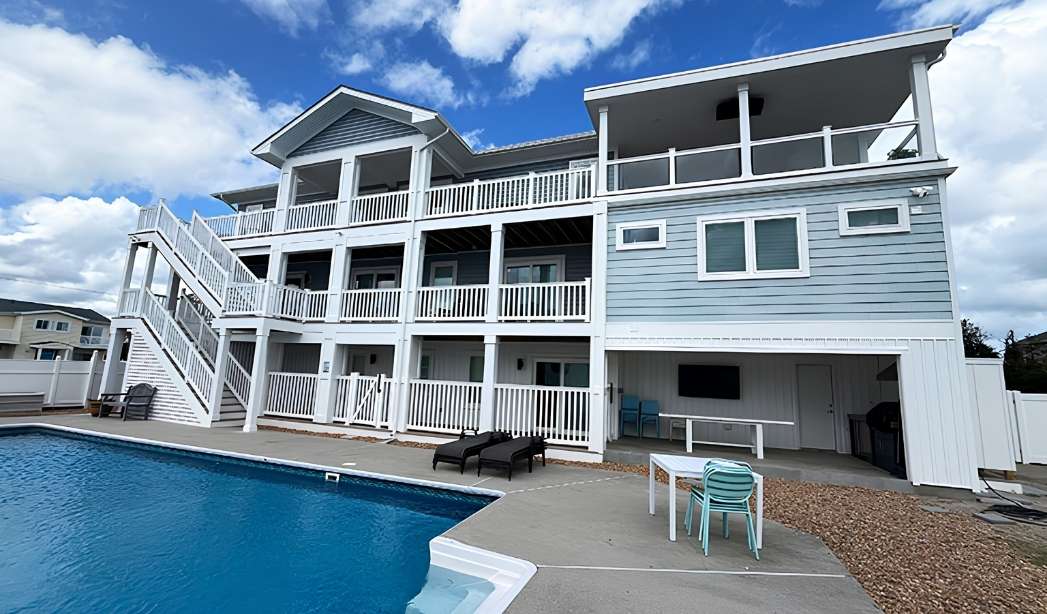
RBC Homes – Bluefish
City approval does not override private restrictions. A homeowners’ association, condominium association, declaration, or deed covenant may prohibit short-term rentals, impose minimum lease periods, limit tenant turnover, or require separate registration.
Investors should review the complete governing documents—not only a resale certificate or verbal statement—and request confirmation of:
- Minimum rental periods
- Rental caps or waiting lists
- Guest and parking restrictions
- Registration fees
- Fines for violations
- Pending rule changes
- The association’s enforcement history
A property may satisfy city zoning rules and still be unusable as a short-term rental because of HOA or condominium restrictions.
Taxes and Licensing
Short-term rental operators must register annually with the Virginia Beach Commissioner of the Revenue and report applicable lodging taxes. The combined transient occupancy and state sales tax is currently 15% of taxable lodging charges in most of Virginia Beach and 16.5% in the Sandbridge Special Service District. A separate $2-per-night flat room tax also applies.
Taxable gross rental revenue can include the nightly charge, cleaning fees, and guest service fees. Booking platforms may collect some taxes, but the owner remains responsible for verifying what was collected, filing the required returns, and remitting any unpaid balance.
Investors should confirm whether they also need a Virginia Beach business license and account for permit fees, accounting, tax filing, and compliance expenses when calculating net income.
Investment Property Types in Virginia Beach
Virginia Beach offers several investment property types, but each comes with different income potential, operating costs, financing requirements, and management demands. Investors should select a property type that aligns with their target tenant, available budget, risk tolerance, and chosen rental strategy.
Single-Family Homes

RBC Homes – Beach 2 Bay
Single-family homes can work well for long-term rentals because they appeal to military households, families, and professionals seeking more space, privacy, parking, and outdoor areas.
Their main advantages include:
- Broad tenant demand
- Longer lease terms
- Strong owner-occupant resale appeal
- Greater control than many association-managed properties
The main drawbacks are higher acquisition costs, maintenance responsibility, and the risk of losing all rental income during a vacancy. Investors should verify whether the expected rent supports the purchase price, insurance, taxes, repairs, and financing.
Multi-Family Units

RBC Homes – X-TA-SEA
Duplexes, triplexes, and small apartment properties can provide multiple income streams from one asset. This can reduce the financial impact of a single vacancy and improve operating efficiency.
However, multi-family properties may require:
- Higher upfront capital
- More active management
- Larger maintenance reserves
- Commercial or specialized financing
- Closer attention to zoning and legal unit count
Investors should confirm that every unit is legally permitted and include shared utilities, common-area maintenance, turnover, and management expenses in the analysis.
Condominiums
Condos may offer a lower purchase price and fewer exterior maintenance responsibilities than detached homes. They can appeal to professionals, retirees, and renters seeking a low-maintenance property near employment, shopping, or coastal amenities.
The main risks are:
- Monthly HOA fees
- Special assessments
- Rental caps
- Minimum lease requirements
- Short-term rental restrictions
- Limited control over building maintenance and reserves
Investors should review the association’s budget, reserve study, recent meeting minutes, rental rules, and planned capital projects before purchasing.
Commercial Properties
Commercial properties can expand real estate investment in Virginia Beach beyond residential rentals through retail, office, industrial, and mixed-use buildings. These investments may offer longer lease terms and tenant-paid expenses, but they usually require more capital, more complex underwriting, and greater exposure to economic and vacancy risk.
Investors should evaluate:
- Tenant credit quality
- Lease length and renewal options
- Responsibility for taxes, insurance, and maintenance
- Local demand for the property type
- Build-out and improvement costs
- Re-leasing time if the space becomes vacant
Commercial real estate should be analyzed separately from residential rentals because financing, lease structures, operating costs, and exit strategies are different.
Vacation Rentals

RBC Homes – Over the Moon
Vacation rentals can generate strong seasonal revenue in legally eligible areas such as Sandbridge and certain Oceanfront properties. However, higher gross income does not always produce higher net returns.
Investors must account for:
- Seasonal occupancy
- Furnishing and utilities
- Cleaning and guest turnover
- Platform fees
- Property management
- Insurance
- Permit and tax requirements
- HOA restrictions
- Coastal maintenance and storm risk
A vacation rental should only be valued using verified short-term rental eligibility and realistic year-round occupancy assumptions.
The right property type is the one that produces the strongest return after all costs, legal restrictions, vacancy, and management requirements are included.
Best Neighborhoods for Real Estate Investment in Virginia Beach

RBC Homes – All-Sea-Suns
The best Virginia Beach neighborhood depends on the investor’s strategy. Long-term landlords should prioritize stable tenant demand and manageable acquisition costs, while vacation-rental investors must focus on legally eligible locations, seasonal revenue, insurance, and operating expenses. Neighborhood-level sales, rent, flood, zoning, and HOA data should be reviewed before making an offer.
Burton Station: Emerging Growth and Development
Burton Station is a redevelopment-focused area near interstate, rail, airport, commercial, and employment connections. Virginia Beach’s long-term plan calls for a medium-density residential and commercial village, additional housing options, and mixed-use development along nearby corridors.
This creates potential for appreciation, but future development should not be treated as guaranteed profit. Investors should investigate project timelines, infrastructure plans, surrounding land uses, comparable rents, and the condition of existing properties. Burton Station may be better suited to investors comfortable with redevelopment risk and a longer holding period.
Pocahontas Village: Suburban Charm With Urban Access
Pocahontas Village may offer a more accessible entry point for investors seeking suburban housing near established services and transportation routes. Its likely tenant pool includes families, workers, and renters who value practical access over beachfront proximity.
Before buying, investors should verify recent comparable sales, achievable rents, property condition, neighborhood-level vacancy, and planned development. Lower acquisition prices can improve cash-flow potential, but only when repair costs, tenant demand, and resale liquidity remain favorable.
Best Areas for Long-Term Rentals

RBC Homes – Happy As a Clam
Kempsville is one of the stronger areas to investigate for long-term rentals because it contains a mix of single-family homes and townhouses and offers access to employment centers, military facilities, shopping, schools, and major roads. Local property-management analysis also identifies it as a comparatively accessible market with consistent rental demand.
Other areas worth evaluating include:
- Town Center: Suitable for professionals seeking apartments, condos, townhomes, and access to offices, retail, dining, and entertainment.
- Bayside and Chic’s Beach: Potential demand from military households, professionals, and renters seeking coastal access without relying entirely on vacation tourism.
- Ocean Lakes: Single-family housing and access to Naval Air Station Oceana may support demand from military households and families.
- Great Neck: Desirable for higher-income tenants but often requires more capital, which may reduce initial yield.
Kempsville Lake remains highly competitive, with homes selling in roughly 35 days, indicating that attractive properties may require quick decision-making and disciplined underwriting.
Best Areas for Vacation Rentals
Sandbridge is the clearest area to evaluate for vacation-rental investment. All properties within the Sandbridge Special Service District are eligible for short-term-rental use, provided the owner obtains the required zoning permit and completes the applicable tax and registration requirements.
The neighborhood’s beach houses, cottages, and condos serve visitors seeking coastal accommodations, but investors must account for:
- Seasonal occupancy
- Flood and wind insurance
- Furnishing and utility costs
- Cleaning and turnover
- Property management
- Maintenance caused by salt air and storms
- The higher transient occupancy tax within the district
The Oceanfront may also offer vacation-rental potential, but eligibility is property-specific and may depend on an existing right or conditional use permit. Investors should never assume a property can operate as a short-term rental based only on its location or current listing language.
Best Areas for Appreciation
Areas with limited supply, strong buyer demand, coastal access, desirable housing, or planned redevelopment may offer greater appreciation potential, but they often provide weaker immediate cash flow.
Neighborhoods to investigate include:
- Great Neck: Established housing, waterfront access, and strong owner-occupant appeal.
- Chic’s Beach: Limited coastal inventory and strong demand, although acquisition prices can be high. The neighborhood’s recent median sale price was approximately $569,000, making careful yield analysis essential.
- Sandbridge: Scarce coastal property and vacation-rental eligibility can support long-term value, but returns are exposed to insurance, weather, and tourism demand.
- Burton Station: Planned residential and commercial redevelopment may create appreciation opportunities over a longer holding period.
- Kempsville: Broad buyer and renter appeal may support steady rather than speculative appreciation.
Investors should not select a neighborhood based on appreciation expectations alone. The stronger investment is usually one that can remain financially sustainable through rental income while the owner waits for long-term value growth.
Example Virginia Beach Investment Property Analysis

The following example shows how an investor might evaluate a hypothetical long-term rental as part of a real estate investment in Virginia Beach. The figures are illustrative and should be replaced with actual property, financing, insurance, tax, and rental data before making a purchase decision.
Purchase Price and Financing
Assume the property has the following acquisition costs:
- Purchase price: $400,000
- Down payment: 25%, or $100,000
- Loan amount: $300,000
- Interest rate: 7%
- Loan term: 30 years
- Estimated monthly principal and interest: approximately $1,996
- Closing costs: $12,000
- Initial repairs: $8,000
- Cash reserves: $10,000
The investor’s total initial cash contribution would be:
$100,000 + $12,000 + $8,000 + $10,000 = $130,000
Estimated Rental Income
Assume comparable long-term rentals support a monthly rent of $2,900.
Annual gross rental income:
$2,900 × 12 = $34,800
Using a 5% vacancy allowance:
$34,800 × 5% = $1,740
Effective annual rental income:
$34,800 − $1,740 = $33,060
Operating Expenses
Estimated annual operating expenses:
- Property taxes: $3,880
- Landlord and flood insurance: $2,400
- Maintenance and repairs: $2,000
- Capital expenditure reserve: $1,500
- Property management at 9% of collected rent: $2,975
- HOA fees: $1,200
- Leasing and miscellaneous costs: $600
Total annual operating expenses: $14,555
Mortgage payments are excluded from operating expenses when calculating net operating income and cap rate.
Monthly Cash Flow
First, calculate net operating income:
$33,060 − $14,555 = $18,505 annual NOI
Annual mortgage payments:
$1,996 × 12 = $23,952
Annual pre-tax cash flow:
$18,505 − $23,952 = −$5,447
Monthly pre-tax cash flow:
−$5,447 ÷ 12 = approximately −$454 per month
Under these assumptions, the property would not generate positive monthly cash flow. The investor would need a lower purchase price, larger down payment, higher achievable rent, lower financing cost, or reduced operating expenses to improve the result.
Cap Rate
Cap rate is calculated before mortgage payments:
Cap rate = Net operating income ÷ Purchase price × 100
$18,505 ÷ $400,000 × 100 = 4.6%
A 4.6% cap rate may be acceptable for an appreciation-focused property, but it may be too low for an investor prioritizing immediate income.
Cash-on-Cash Return
Cash-on-cash return is based on annual pre-tax cash flow and total cash invested:
Cash-on-cash return = Annual pre-tax cash flow ÷ Total cash invested × 100
−$5,447 ÷ $130,000 × 100 = −4.2%
This negative return shows why investors should not judge a property based only on rent or appreciation potential. Even when gross rental income appears strong, financing and operating costs can result in negative cash flow.
The property may still become viable if the investor negotiates a lower purchase price, increases the down payment, improves rental income, completes value-adding renovations, or secures more favorable financing.
Demographic Trends: Housing Demand in Virginia Beach
Virginia Beach has a large and diverse housing base, but investors should not assume rapid population growth. Demand is shaped more by military turnover, established households, employment, limited housing supply, and changing age and affordability needs.
Population Growth and Projections
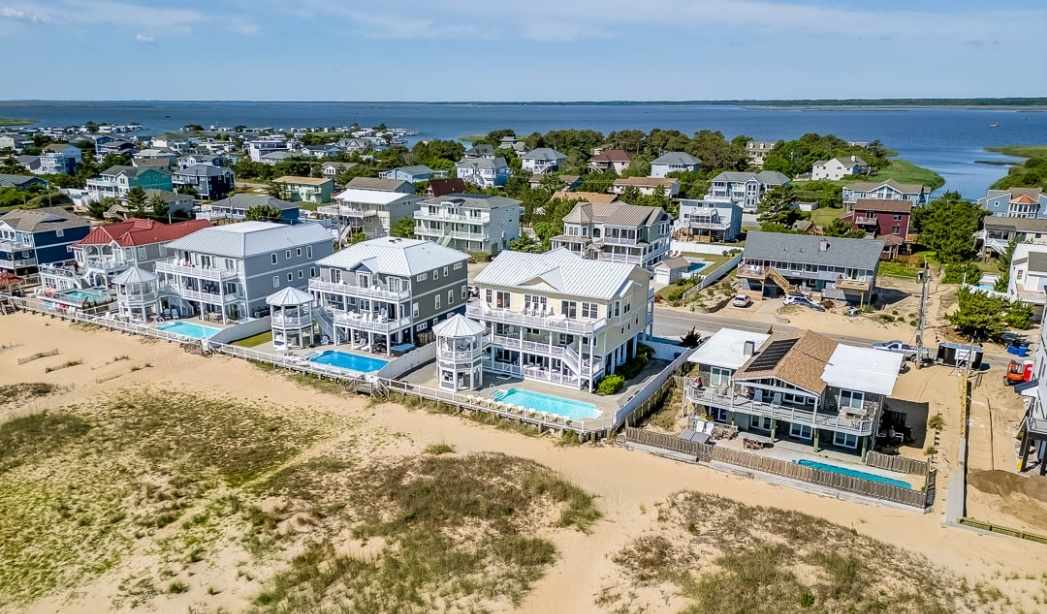
RBC Homes – All Inn
Virginia Beach had an estimated population of 453,737 in July 2025, compared with an April 2020 estimates base of 459,417. This indicates a modest population decline rather than the 5% decade-long growth previously stated in this article.
The city still contains approximately 179,851 households and 192,699 housing units. About 84.9% of residents lived in the same home as the previous year, suggesting a relatively stable resident base despite regular military and employment-related movement.
For investors, this means demand should not be justified by population growth alone. More useful indicators include:
- Household formation
- Rental affordability
- Military relocation activity
- Employment near the property
- New housing construction
- Neighborhood-level vacancy
- Changes in household size and age
Only 436 residential building permits were recorded in 2025, while the city has noted that buildable land in northern Virginia Beach is scarce and often sells at a premium. Limited new supply can support existing property values and rents, although it can also make acquisitions less affordable.
Military Families and Defense Contractors

RBC Homes – Aquatic Dreams
Military demand is one of Virginia Beach’s most important housing drivers. The city and surrounding region contain Naval Air Station Oceana, Joint Expeditionary Base Little Creek–Fort Story, Dam Neck, Naval Station Norfolk, NATO facilities, and other major defense assets.
Virginia Beach also supports major defense contractors and cybersecurity employers, including BAE Systems, General Dynamics, and Lockheed Martin. This broadens housing demand beyond active-duty personnel to civilian employees, contractors, veterans, and transitioning service members.
For rental investors, military-related demand can favor properties with:
- Reasonable commuting access to installations
- Three or more bedrooms
- Off-street parking
- Fenced outdoor space
- Flexible lease-start dates
- Durable finishes
- Professional property management
Military demand can be stable, but tenant turnover may be higher because of transfers and deployments. Investors should therefore budget for leasing, cleaning, vacancy, and periodic turnover rather than assuming uninterrupted occupancy.
Young Professionals and Remote Workers

RBC Homes – Atlantic Villa Fran-to-Sea
Young professionals can strengthen demand for real estate investment in Virginia Beach, particularly for condos, apartments, and townhomes near Town Center, employment hubs, restaurants, shopping, and major transportation routes. Technology, cybersecurity, finance, healthcare, defense, and professional services support renters who value convenience and lower-maintenance housing.
Virginia Beach is well equipped for remote and hybrid work: 94.4% of households had a broadband internet subscription during the 2020–2024 period.
Properties targeting this group may benefit from:
- Reliable high-speed internet
- A dedicated office or flexible extra bedroom
- Proximity to dining and services
- Low-maintenance outdoor areas
- Parking
- Modern kitchens and updated interiors
Remote work should be treated as a supporting demand factor, not as proof that every urban or coastal rental will perform well. Investors still need to verify achievable rent and local occupancy.
Families, Retirees, and First-Time Buyers
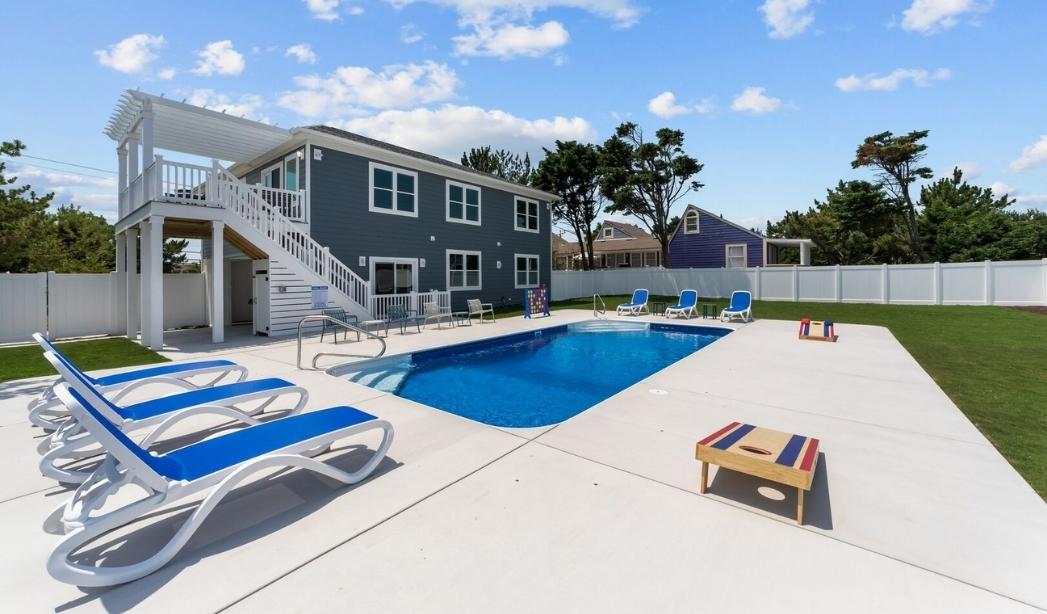
RBC Homes – Beach 2 Bay
Families often seek single-family homes and townhouses with multiple bedrooms, storage, outdoor space, school access, and practical commutes. These requirements can support long-term rental demand in established suburban neighborhoods.
Retirees represent another important segment. In 2026, the city reported that 54,046 Virginia Beach households—approximately 30% of all households—were headed by someone aged 62 or older. More than one-third of those households were considered housing-cost burdened.
This creates potential demand for:
- Single-level homes
- Smaller houses and condos
- Low-maintenance properties
- Accessible layouts
- Housing near healthcare and daily services
First-time buyers compete with investors for many affordable single-family homes and townhouses. Virginia Beach’s housing study found that increased competition is making it harder for first-time and moderate-income buyers to purchase homes and for renters to find suitable affordable units.
For investors, this supports demand for moderately priced rentals but also increases acquisition competition. The strongest opportunities are likely to be properties that serve a clearly defined household group at a sustainable rent, rather than high-priced homes dependent on aggressive appreciation assumptions.
Property Management for Virginia Beach Investment Properties
Property management directly affects vacancy, maintenance costs, tenant experience, legal compliance, and net income. Investors should compare self-management with professional management based on time, expertise, property type, and expected return.
Self-Managing Versus Hiring a Property Manager

Self-management can reduce monthly fees, but the owner becomes responsible for leasing, tenant communication, inspections, repairs, rent collection, accounting, and legal compliance.
Professional management may be more appropriate when:
- The owner lives outside the area
- The property has frequent turnover
- The investor lacks landlord experience
- The portfolio includes several units
- The property operates as a short-term rental
- The owner cannot respond quickly to emergencies
Management fees should be included in the investment analysis even when the investor initially plans to self-manage. This provides a more realistic view of the property’s long-term performance.
Tenant Screening and Leasing
A property manager may handle advertising, showings, applications, screening, lease preparation, move-in documentation, and renewals.
Investors should ask:
- Which screening criteria are used
- How income and rental history are verified
- How fair housing compliance is maintained
- Whether leasing fees are charged separately
- How long units typically remain vacant
- How renewals and rent increases are handled
Strong screening can reduce risk, but no process eliminates the possibility of late payment, damage, or eviction.
Maintenance and Repairs
Management companies often coordinate routine maintenance and emergency repairs. Investors should understand how vendors are selected and whether the company adds a markup to invoices.
Review:
- Maintenance approval limits
- Emergency procedures
- Contractor relationships
- Invoice documentation
- Repair markups
- Inspection frequency
- Capital-project oversight
For coastal properties, the manager should also understand moisture, flood, wind, and salt-air maintenance issues.
Rent Collection and Financial Reporting

Professional managers may handle rent collection, late fees, owner statements, security-deposit accounting, and year-end reporting.
Investors should confirm:
- Payment frequency
- Reporting format
- Owner portal access
- How reserves are held
- Security-deposit procedures
- Delinquency follow-up
- Eviction coordination
- Accounting and tax documentation
Clear reporting makes it easier to compare actual results with the original investment projections.
Choosing a Virginia Beach Property Management Company
Investors should compare companies based on service quality and fee structure, not marketing claims or technology alone.
Review:
- Monthly management fee
- Leasing and renewal fees
- Maintenance markups
- Setup and inspection charges
- Contract termination terms
- Average vacancy period
- Portfolio size and staffing
- Experience with the property type
- Short-term rental capabilities
- Local legal and coastal-property knowledge
The right manager is the one that protects income, controls costs, communicates clearly, and provides reliable documentation.
Future Outlook for Virginia Beach Real Estate

RBC Homes – A Crown Jewel
The outlook for real estate investment in Virginia Beach may remain supported by military activity, tourism, regional employment, limited land supply, and established housing demand. However, future performance will depend on affordability, financing costs, insurance, development, regulation, and neighborhood-level demand.
Home Price and Rent Trends to Watch
Investors should monitor:
- Median sale prices
- Rent growth
- Days on market
- Price reductions
- Inventory
- New listings
- Vacancy
- Concessions
- Foreclosure activity
Rising prices can support appreciation, but they may also compress rental yields when rents do not increase at the same pace.
Emerging Neighborhoods and Development
Areas such as Burton Station may offer long-term potential because of planned redevelopment, infrastructure, and mixed-use growth.
However, investors should verify:
- Approved projects
- Construction timelines
- Public funding
- Infrastructure commitments
- Comparable sales
- Rent growth
- Existing neighborhood conditions
Planned development should not be treated as guaranteed appreciation.
What the Outlook Means for Investors
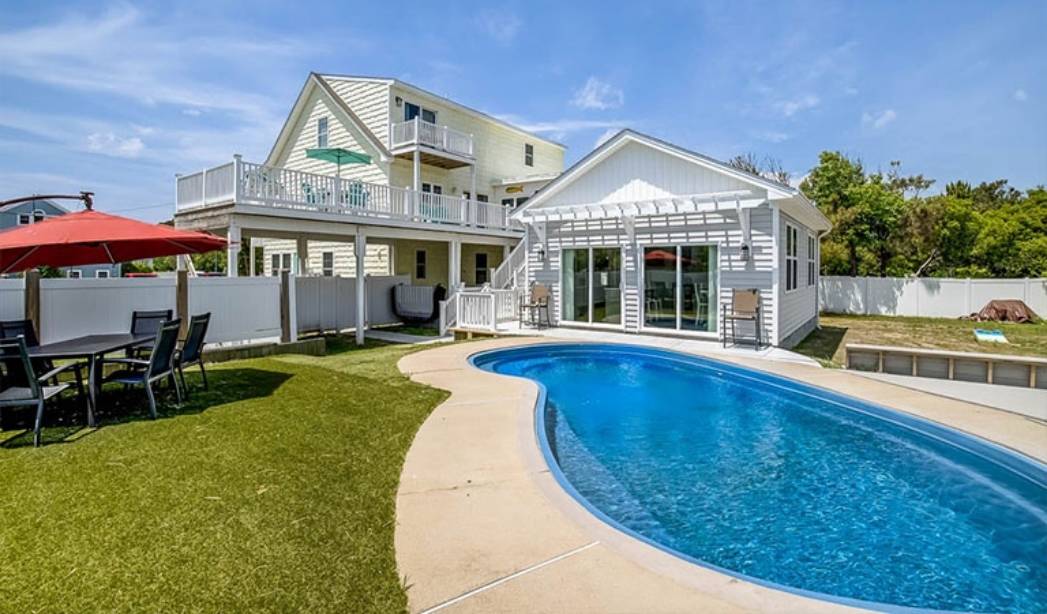
RBC Homes – Bikini Blonde
Virginia Beach may remain attractive for investors who buy at a defensible price, verify rental demand, and budget conservatively.
The strongest opportunities are likely to be properties that offer:
- Sustainable rent
- Manageable insurance and maintenance costs
- Legal rental use
- Adequate cash reserves
- More than one viable exit strategy
Investors should avoid relying on broad market growth alone. A property should remain financially workable even if appreciation slows, financing stays expensive, or operating costs increase.
FAQs About Real Estate Investment in Virginia Beach
Here are the most frequently asked questions about the real estate market in Virginia Beach.
I. Is Virginia Beach a Good Place to Invest in Real Estate?
Virginia Beach can be a good market for investors who choose the right property, neighborhood, and rental strategy. Demand is supported by military households, professionals, families, and tourists, but returns depend on purchase price, financing, insurance, flood exposure, HOA rules, operating costs, and legal rental eligibility.
II. Is Virginia a Good State for Real Estate Investment?
Virginia offers a range of investment markets with different price points, employment bases, rental demand, and regulations. Virginia Beach may appeal to investors interested in military, coastal, and tourism-related demand, while other parts of the state may offer lower acquisition costs or different growth drivers. Each market should be analyzed separately.
III. What Is the Most Profitable Property Type in Virginia Beach?
There is no single property type that is always the most profitable. Single-family homes may offer broad tenant demand, small multi-family properties can provide multiple income streams, and vacation rentals may generate stronger seasonal revenue in eligible locations. Profitability depends on acquisition cost, rent, vacancy, financing, management, insurance, and maintenance.
IV. How Is the Real Estate Market in Virginia Beach?
Virginia Beach remains a competitive market with rising home values, relatively strong rents, and limited supply in some areas. However, higher prices can make immediate cash flow harder to achieve. Investors should use current neighborhood-level sales and rental data rather than relying only on citywide averages.
V. What Are the Most Expensive Areas of Virginia Beach?
Bay Colony, Sandbridge, Alanton, Great Neck, and other waterfront or coastal neighborhoods are among the higher-priced areas of Virginia Beach. These locations may offer strong owner-occupant demand and long-term appreciation potential, but higher acquisition, insurance, HOA, and maintenance costs can reduce rental yields.
Conclusion: Is Virginia Beach Real Estate a Good Investment?
Virginia Beach can offer viable opportunities across long-term rentals, vacation rentals, multi-family properties, and selected commercial assets. Demand is supported by military activity, tourism, regional employment, and an established housing base, but these factors do not guarantee a profitable property.
The strongest investments are usually purchased at a defensible price and supported by verified rental demand, legal rental use, manageable insurance and maintenance costs, adequate reserves, and realistic return assumptions. Investors should evaluate each property using neighborhood-level data, actual financing terms, full operating expenses, and a clear exit strategy.
For guidance on evaluating, renovating, or building a real estate investment in Virginia Beach, contact RBC Homes to discuss the property, budget, and long-term plan.